The introduction of the new PCMCIA RTG card for Amiga 600 and Amiga 1200 by P-Vision is not only exciting news for retro gaming enthusiasts but also a testament to the continuing interest in preserving and enhancing classic computing platforms.
This advancement could potentially ignite a renewed wave of innovation within the retro community, as developers might be inspired to explore similar projects and further expand the capabilities of vintage hardware. Moreover, the increased functionality provided by this card may open up new opportunities for gamers to experience their favorite titles in higher resolutions and with improved graphics. All in all, the release of the PCMCIA RTG card serves as a reminder that the spirit of Amiga is still alive and well.
Maybe we can get a port of SimCity 2000 that works better in the end?
P-Vision Introduces A Different Approach to Amiga Graphics
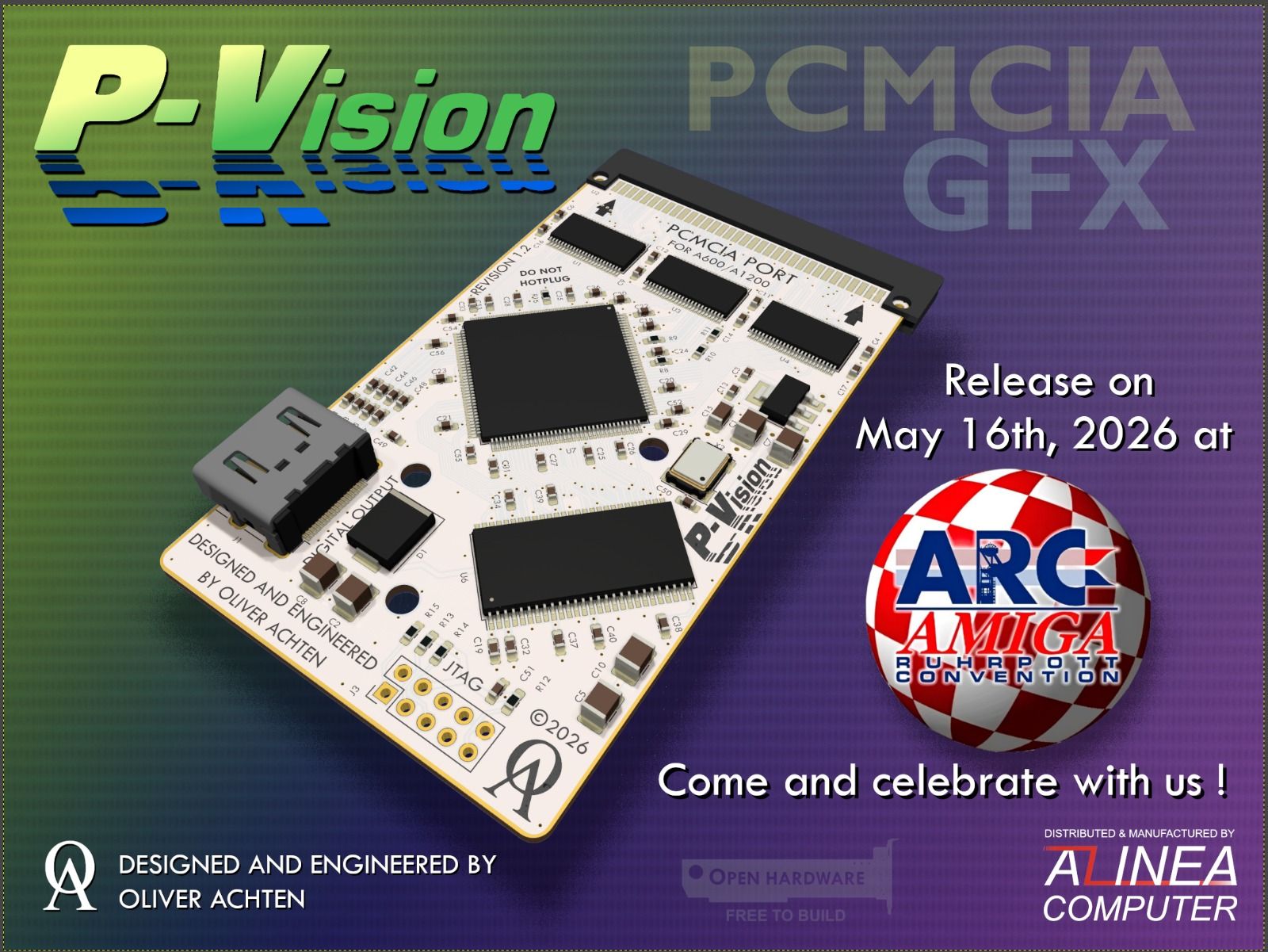
A brand-new graphics solution for classic Amiga computers has been revealed. It will be available in May, according to Alinea! The P-Vision PCMCIA GFX introduces a unique approach by delivering RTG graphics through the PCMCIA slot on both the Amiga 600 and Amiga 1200.
Unlike traditional Amiga graphics upgrades that rely on internal expansions such as CPU slots, Zorro cards, or PCI solutions, this new hardware connects externally through the PCMCIA interface. This makes installation significantly easier and more accessible for users who prefer not to open their machines.
📅 ARC #4 – Amiga Event Link – Facebook
📍 Friedenskirche
Lutherstraße 3
47228 Duisburg-Rheinhausen
🗓 16.05.2026
The use of the PCMCIA port is what makes the P-Vision stand out. While the interface has historically been used for networking, storage, and compact expansions, it has rarely been used for graphics acceleration.
By leveraging this port, the P-Vision aims to provide:
- RTG (ReTargetable Graphics) support
- Higher resolution Workbench environments
- Modern display compatibility through digital output
This could make it one of the most accessible RTG upgrades available for classic Amiga systems.
Designed for Simplicity and Accessibility
Because the device connects externally, it removes several barriers typically associated with upgrading classic Amiga hardware. Users may no longer need to install internal accelerators or expansion boards just to achieve improved graphical output. However a 68030 or higher accelerator is recommended as it will give the machine more Fast Mem and better speed!
This design philosophy aligns well with users who want to preserve their original hardware while still benefiting from modern display capabilities.
Hardware and Development
The P-Vision PCMCIA GFX is designed and engineered by Oliver Achten and will be distributed by Alinea Computer in May, this year!
The board features a compact design with multiple integrated components and a digital output interface. It also includes a JTAG header, suggesting that the firmware is programmable and actively being developed.
Interestingly, the project is marked as open hardware, meaning that the design may be available for the community to study, modify, and potentially expand upon.
Here is a comparison between P-Vision and Picasso II
| Feature | P-Vision PCMCIA GFX | Picasso II |
|---|---|---|
| Connection | PCMCIA (external) | Zorro II (internal) |
| Target Systems | Amiga 600 / 1200 | Amiga 2000 / 3000 / 4000 |
| Installation | No need to open the machine | Requires opening and installing card |
| Performance Class | Comparable to Zorro II bandwidth | Zorro II bandwidth |
| Display Output | Digital output (modern displays) | Analog VGA output |
| RTG Support | Yes | Yes |
| Typical Use Case | Modern Workbench (e.g. 720p) on A600/A1200 | RTG Workbench on Zorro equipped Amigas |
| Hardware Era | Modern (2020s) | 1990s |
| Accessibility | High (plug-and-play style) | Moderate (requires compatible system) |
The P-Vision PCMCIA GFX is not trying to compete with high-end RTG solutions used alongside PiStorm or Vampire systems. Instead, it targets a different and very relevant group of users — those running more traditional setups based on the Amiga 1200 and Amiga 600 with 68020 and 68030 processors. In the comparison box above you can see how it competes with Picasso II for Zorro equippped Amigas.
For these users, achieving modern display output has often required more complex and expensive upgrades. The P-Vision offers a simpler path. Especially for people that doesn’t need PiStorm or Vampire speeds, but simply RTG output.
Higher resolutions for Amiga 600 and Amiga 1200
With support for RTG, the card aims to make it possible to run AmigaOS in higher resolutions such as 720p, offering a much more comfortable Workbench experience compared to traditional PAL or NTSC screen modes.
This makes everyday use — from file management to productivity tools — significantly more pleasant on modern displays.
Release Information of P-Vision
The P-Vision PCMCIA GFX is expected to be officially presented on May 16th, 2026 at the ARC Amiga Ruhrpott Convention and hope it will be released for purchase through their on-line store just after that.
This event has become a key meeting point for Amiga enthusiasts and hardware developers, making it a fitting place to showcase such an innovative expansion.
A Promising Addition to the Amiga Ecosystem
While full technical specifications and performance details have yet to be revealed, the concept alone makes the P-Vision PCMCIA GFX a very exciting development. Once we have it in our hands, Amitopia will reveal it to you.
By rethinking how graphics expansion can be delivered on classic Amiga systems, this solution could open the door for more accessible upgrades and renewed interest in the PCMCIA capabilities of the platform.