
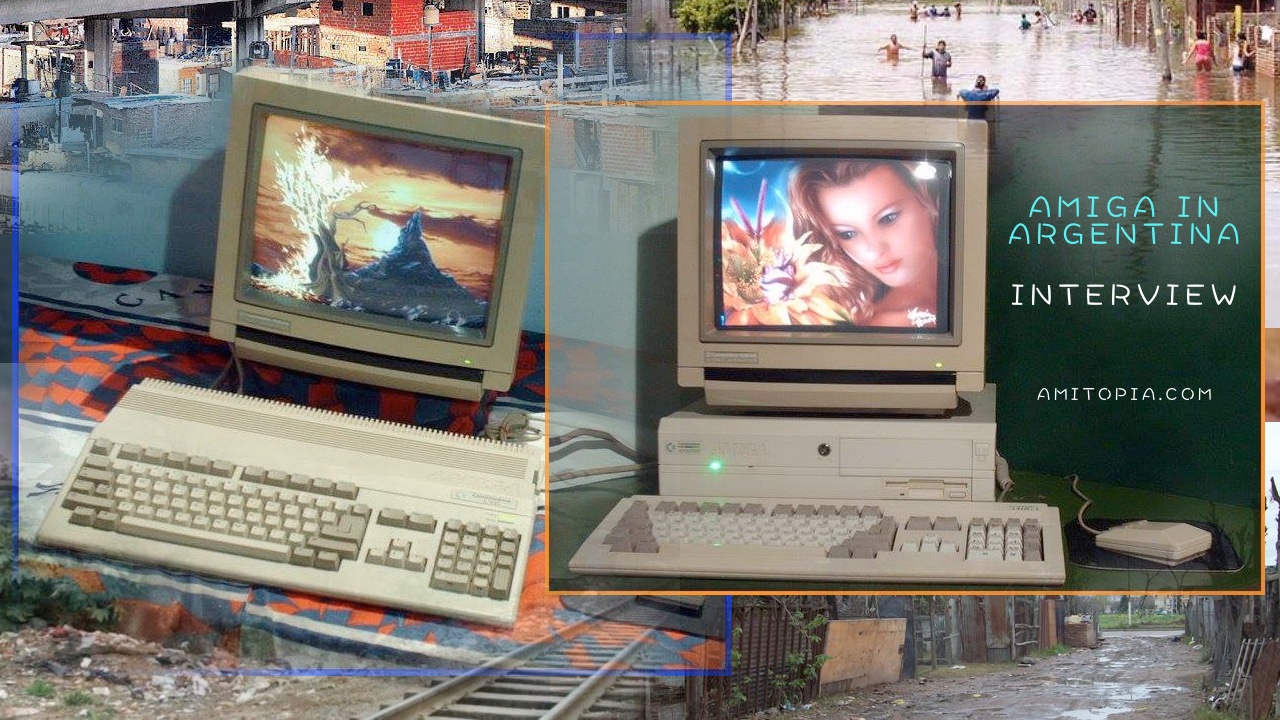
Here is my interview with an Amiga person from Argentina in South America. It is all about how the Amiga situation was and still is in Argentina.
Personally, I have worked a lot with this interview. It’s taken some time, but I hope it is worth the reading. First I thought of just publishing it as a raw article, but then the interviewee sent me pictures and I am a person that really cares about the people I interview. So finally, I decided to give it a deeper presentation as he agreed to it.
Argentina is a huge country in South America that sits next to Brazil and is far away from both the USA and Europe where the Amiga computing platform had its biggest popularity back in the days of Commodore. However, there seems to have been and still are active Amiga users there. One of them is Claudio Daniel De Castro.
He agreed to answer many of my questions and he did it in Spanish, so I needed time to get everything translated correctly. Here is the result. This has been one of my toughest interviews ever.
Could you tell us a little about yourself? What are you doing today in Argentina?
Without fixed work my economy is pathetic and locked with PC technology Trash I sell some PC refurbished diskettes Amiga and free story in schools history the computer that was lost … I enjoy playing on my Real A500 with a perfect game command .. more than on my PC computer running the FIFA 2017 … I prefer the Amiga and what I already told you I’m sick with depression.
How was the situation in Argentina when Commodore computers entered the market, and how did Commodore manage to gain users there?
Today in 2017 the poverty in Argentina is even worse. Argentina’s poor is at 40%. They are all really poor in Argentina.
The politicians agreed a few days ago to remove the poorest bone retirees from our grandparents to the pensioners to those who have less will take more money and not me or my family as we are going to live.
In the 90’s a dollar was equal to one peso today day 2017 1 dollar is equal to 18 pesos soon it reached 20 pesos plus the silver that they take out to those who have less grow more and more the poor I am according to the measurement in indijencia and the one that awaits us for 2018.
In the 90 1 peso, 1 dollar hard 10 years but in 2000 began the destruction and then the corruption to the limete.
Today we are paying money to a government that only cares about the rich, the entrepreneurs, the people who pay a lot of taxes, the others who rot who die in those, and I am one of them.
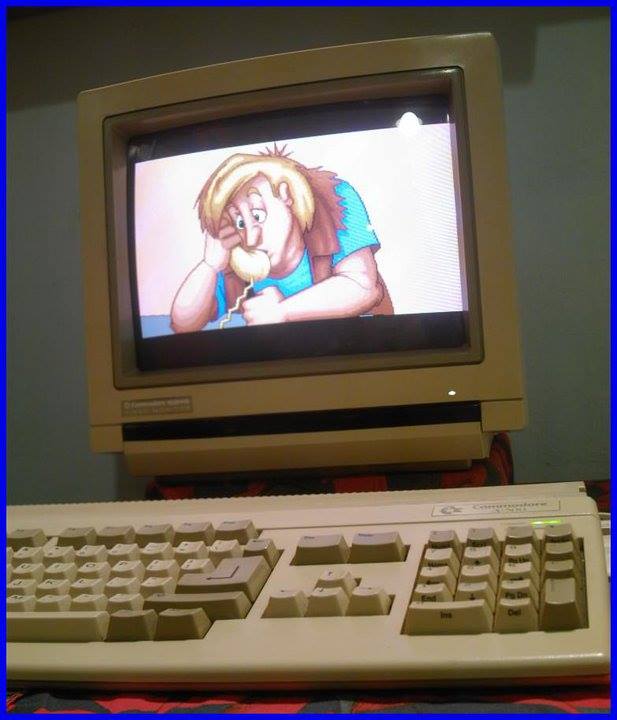
The government from 2003 to 2015 was the most corrupt in Argentina’s history. Then, since 2015 to this day is the government that governs only for the rich.
But in the 90s however, the government focused on privatizing almost all state-owned companies and improving the service that made it possible for Commodore computers to reach many homes.
Everyone in Argentina had a Commodore at home. Imports were like bringing candy from the United States and that’s why to this day people remember Commodore but not so much Amiga in Argentina.
Recently YPF showed the evolution in technology in Argentina and in a moment of its broadcast, they mentioned a Commodore 64 but then a few days later in the very same publicity too.
On whether Commodore cared more for poor people that I cannot tell, but my opinion is that in the late 80’s and early 90’s people had that belief.
What I do know is that Commodore with their strategy managed to reach many homes in Argentina with computers that almost anyone could buy.
In Argentina, Commodore is also the most well-known and best-selling computer in the history of computers here. Commodore 64 usage today in 2017 is still at the top in my country.
Amiga 500 could be bought being middle class when it was launched here. But Amiga 2000, 3000, CDTV, 1200, 600 and 4000 required upper-middle class buyers.
When the 1 peso = 1 dollar system ended in the year 2000 many people were forced to sell their Amigas and move to PC.
But the value of Commodore Amiga was very close to the value of a 486 PC in Argentina.
Comparing what came out of a PC computer with Windows 95 monitor VGA floppy disk drive + HD + sound card + video card you bought without a monitor a Commodore Amiga 1200 + HD and some extra Fast 4MB memory.
Since 1 dollar was equal to 1 peso in Argentina Commodore Amiga came to many households and those who bought PC only found them in banks for data entry.
It was already very clear that Commodore Amiga had technology years ahead of PCs.
The Amiga should have been the winner.
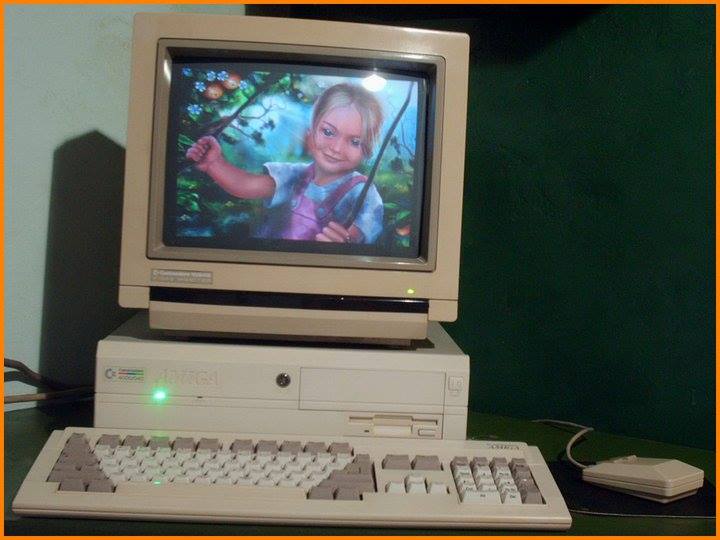
How did you first discover the Amiga, and who introduced you to it?
I tell you that when I bought the Amiga 500 I also got it with a color printer and an old friend prepared a report for school. No one had Amiga plus a printer and when I got mine it seemed incredible. That person printed everything and then I took the Commodore Amiga to the best of my life.
How popular was the Amiga in Argentina around 1990, and what was the scene like at that time?
The popularity was reflected when you saw the games and the posters. All of the games for computers such as ZX Spectrum, Commodore 64 and PC did not look great. It was always the Amiga 500 that won my heart.
The Amiga became huge but never as huge as Commodore 64 in Argentina.
What was the general situation for Amiga users in Argentina during that period?
The ones who studied computing in the 90s all wanted an Amiga here. Luckily I had many Amiga models, but other friends could not buy them.
In Buenos Aires Capital Federal around 60% to 75% used Amiga or were collecting money to buy Amiga computers.
Amiga was very popular because many animations and productions were made with it.
What happened to the Amiga community in Argentina after Commodore’s demise in 1994?
In 1994 Amiga was used in many places. TV channels used Amiga, people who filmed parties used them, and wedding video editing was done using Amiga computers in Argentina.
People continued using Amiga for many years after Commodore disappeared.
Only a few moved to PC, and many later returned to Amiga.
How many Amiga users were there in Argentina during the 1990s, and how popular is the platform today?
In 1998 it started to be noticeable in stores and magazines that about 30% of people were selling Amiga and buying PC.
But TV channels and discotheques continued using Amiga for many years.
I remember exchanging a PC for a complete Amiga 1200 system with accelerator, Vidi 24, sound sampler, RAM, monitor, floppy drive and hard disk.
I even worked in a nightclub using Scala to create 2D and 3D animations shown on big screens.
Today in 2017 some acquaintances still use Amiga with Video Toaster for weddings and events.
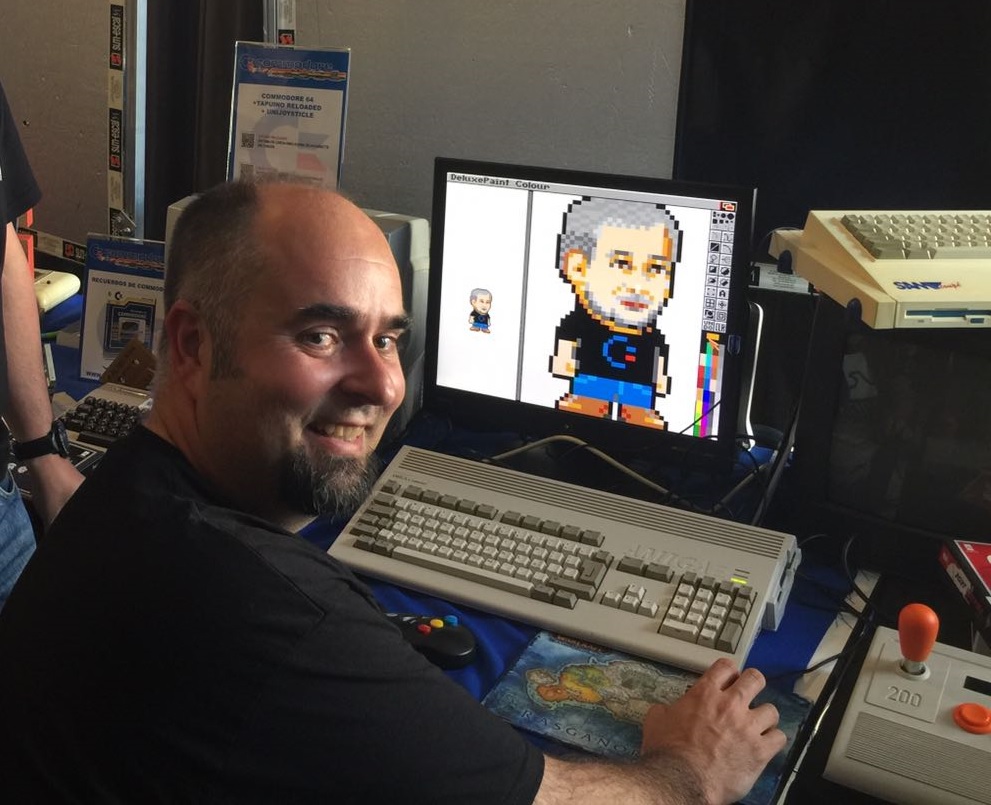
I still have an Amiga 500 with more than 400 disks.
Even if my PC can play FIFA 2017 I still prefer playing on the Amiga 500.
Were there any Amiga user groups in Argentina, and do any still exist today?
Until around 2002 there was a group of good people but it disappeared.
Today there is a retrocomputing forum but I do not recommend it.
Valente Computación were two brothers who recorded software and worked with Amiga on television and in nightclubs.
They even projected Sensible Soccer on big screens in clubs.
Where do Amiga users in Argentina get hardware today?
Since 1996 it has been almost impossible to buy new Amiga hardware in Argentina.
Only used equipment exists and often at very high prices.
Importing hardware from Europe is only possible for very wealthy people.
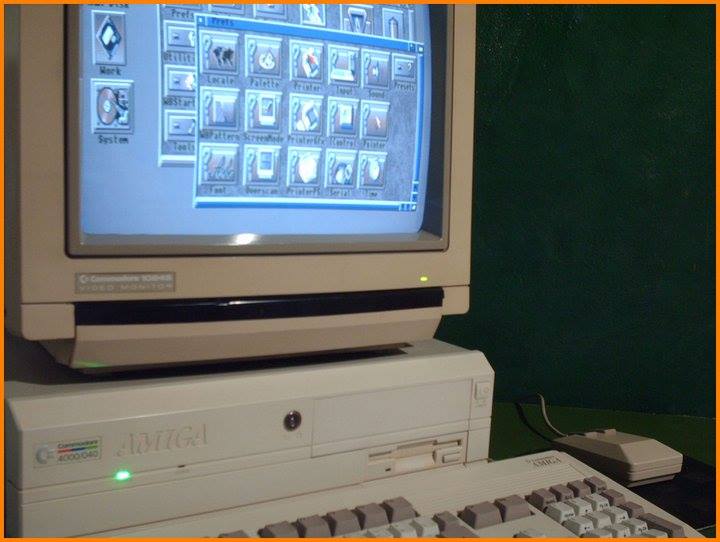
Were Spanish Amiga magazines available in Argentina during the 1990s?
In the 1990s many Spanish, English and German magazines could be found until about 1995.
The Internet arrived very late in Argentina.
Most people only used it for email and MSN around the late 1990s.
What are your thoughts on modern Amiga-related projects such as AROS and MorphOS?
I did not like AROS but MorphOS feels closer to the original Amiga experience.
What are your thoughts about the future of the Amiga platform?
I believe the Vampire FPGA is the most promising direction for Amiga hardware.
PowerPC Amiga systems are powerful but need more drivers and software.
Many users end up installing Linux instead of using AmigaOS.
Vampire FPGA Amiga Forever.
What is your opinion about Commodore as a company and its impact in Argentina?
Commodore 16, 64 and 128 were extremely popular in Argentina.
The Dream manufactured Commodore machines sometimes had quality problems.
But Commodore computers were still among the most popular systems ever sold in the country.
Is there anything you would like to say to the Amiga community before we finish?
The Amiga is the only computer that had something machines normally do not have: soul.
Only true Amiga fans understand what makes it special.
I hope the Amiga will continue to live for many more years.
Amiga Forever.
We at Amitopia thank Claudio for all of his answers. This interview has been an emotional ride even for me as the interviewer.
We hope you enjoyed this interview and continue to support Amitopia for more articles like this.
Source
Amitopia Own Experience


Outstanding article! I really enjoyed reading this, and it opened my eyes wide about Argentina. Great and important work!
This is rubbish! It´s a partial vision of a person who admites he´s sick by depression. Of course he see the reallity with the darkest glasses. I don´t reject that the economical situation is bad in Argentina (since I was born in 1979) but this person puts Argentina in the same context that the poorest countries of the World!!!! Really we ´re in crisis, we have a lot o poor people but even the pictures in the interview is an exaggeration! In fact, all the cities in the whole planet have sites with people living in precarious conditions but I can not “simplify” , for example, London city, showing the poorest neighborhood.
In another sense, only in the 80´s Commodore was “popular” in Argentina when a local company acquired the royalties to market the Commodore brand. adding his own brand “Drean” (not Dream). In this way, the “Drean Commodore 64” solds a lot of home computers making a revolution in this new market. In the following years the situation changed because “Amiga” was never manufactured in Argentina. The people who had an “Amiga” in these times, sure had an imported model, acquired at a price higher than a “PC”. The reason is simple: the IBM PC had a lot of clones, many programs in spanish and the most important thing: A lot of publicity.
Merry Christmas!!!!